What Your AI Training Strategy Is Missing
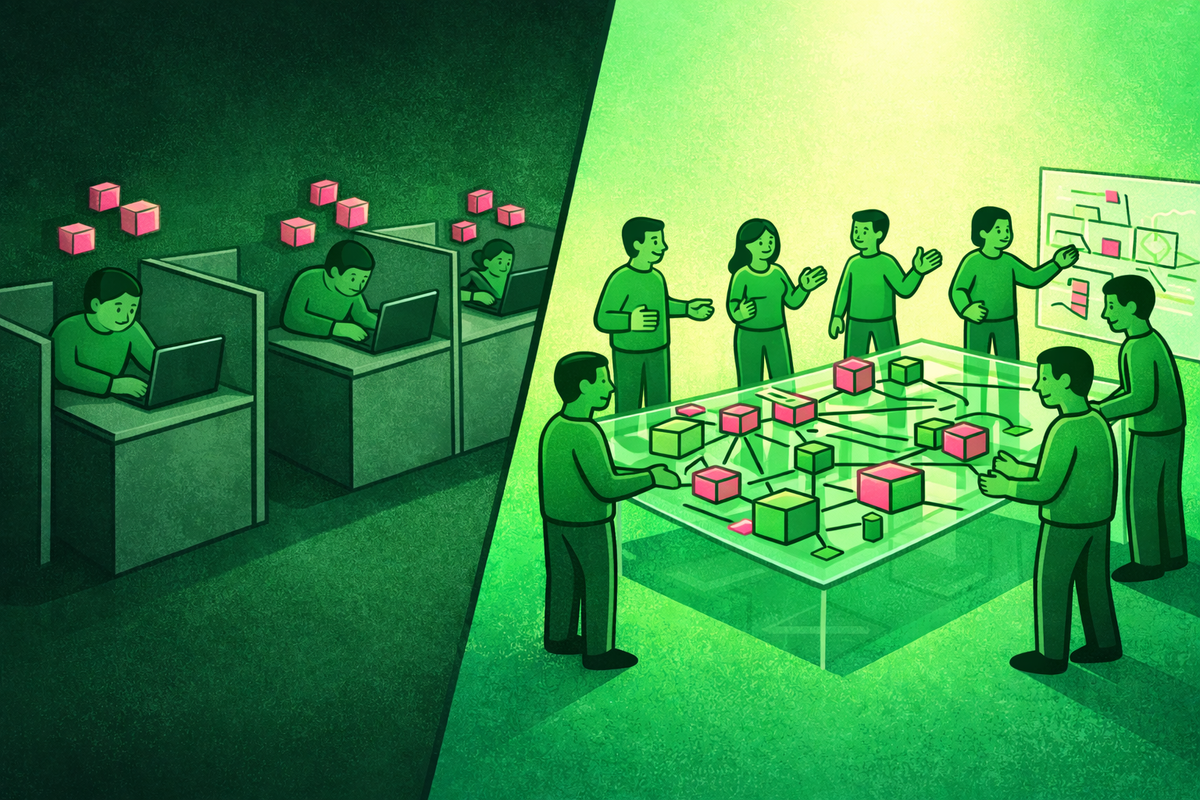
Most teams are stuck at task augmentation because that's what training teaches. Transformation requires showing them process redesign exists.

I'm seeing a pattern across teams.
They're using AI, getting individual wins, but it's not scaling in their orgs.
Leaders sometimes peg it as an adoption problem.
They think more people need to get comfortable using the tools.
But that's not the root of the issue.
Digging deeper... It's because people are being trained to augment tasks, not redesign processes.
How AI Transformation Happens
To understand why teams are getting stuck, it's helpful to know how transformation works.
Here are four levels of AI integration:
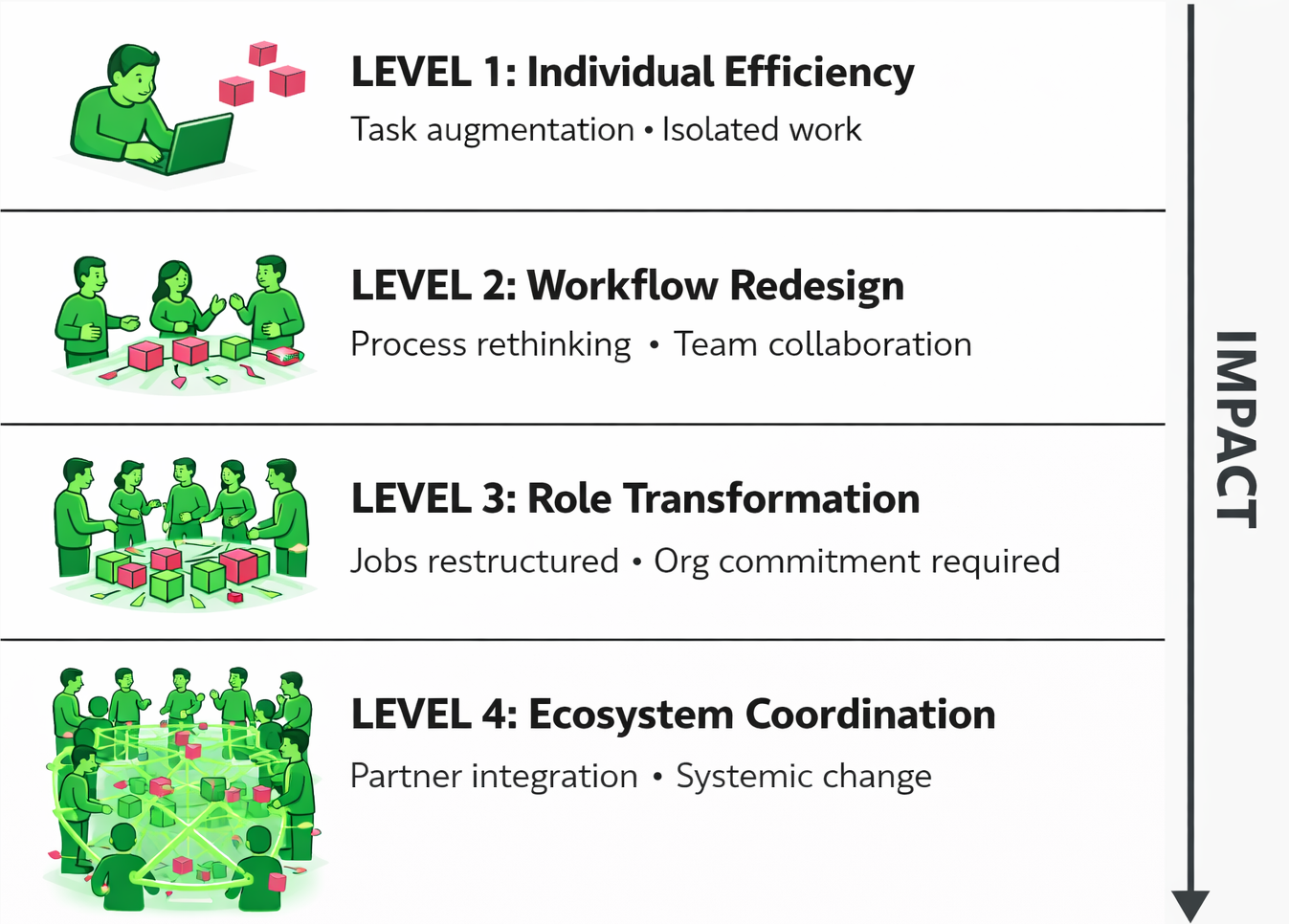
Level 1: Individual Efficiency
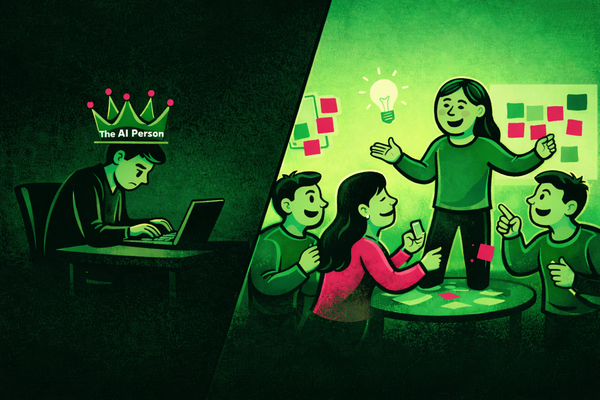
The team uses AI to work on their individual work.
Tasks like: drafting emails, project support, basic research and analysis.
This is where most AI use lives.
One person acting without changing how the team works.
Level 2: Workflow Redesign
Team members start to rethink how work flows.
From "how do I draft my email better" to "should this process require emails at all?"
From "how do I use AI in my role" to "how should this workflow fundamentally change?"
This requires people who can see process redesign opportunities and an org willing to embrace them.
Very few orgs have made it here.
Level 3: Role Transformation
This level emerges from sustained workflow redesign.
Jobs get restructured around what AI enables and the new processes your team has built.
This requires organizational commitment to rethinking what work looks like.
Level 4: Ecosystem Coordination
Integration across your entire ecosystem (partners, vendors, industry systems).
This requires coordination beyond your org.
It's the hardest level to reach because it depends on others adopting alongside you.
Once you make the jump from Level 1 to Level 2, Levels 3 and 4 will start happening naturally through Level 2 action.
The hard part is getting people from augmentation thinking to redesign thinking.
And that's where most orgs are stuck today.
What Moves Teams from Level 1 to Level 2
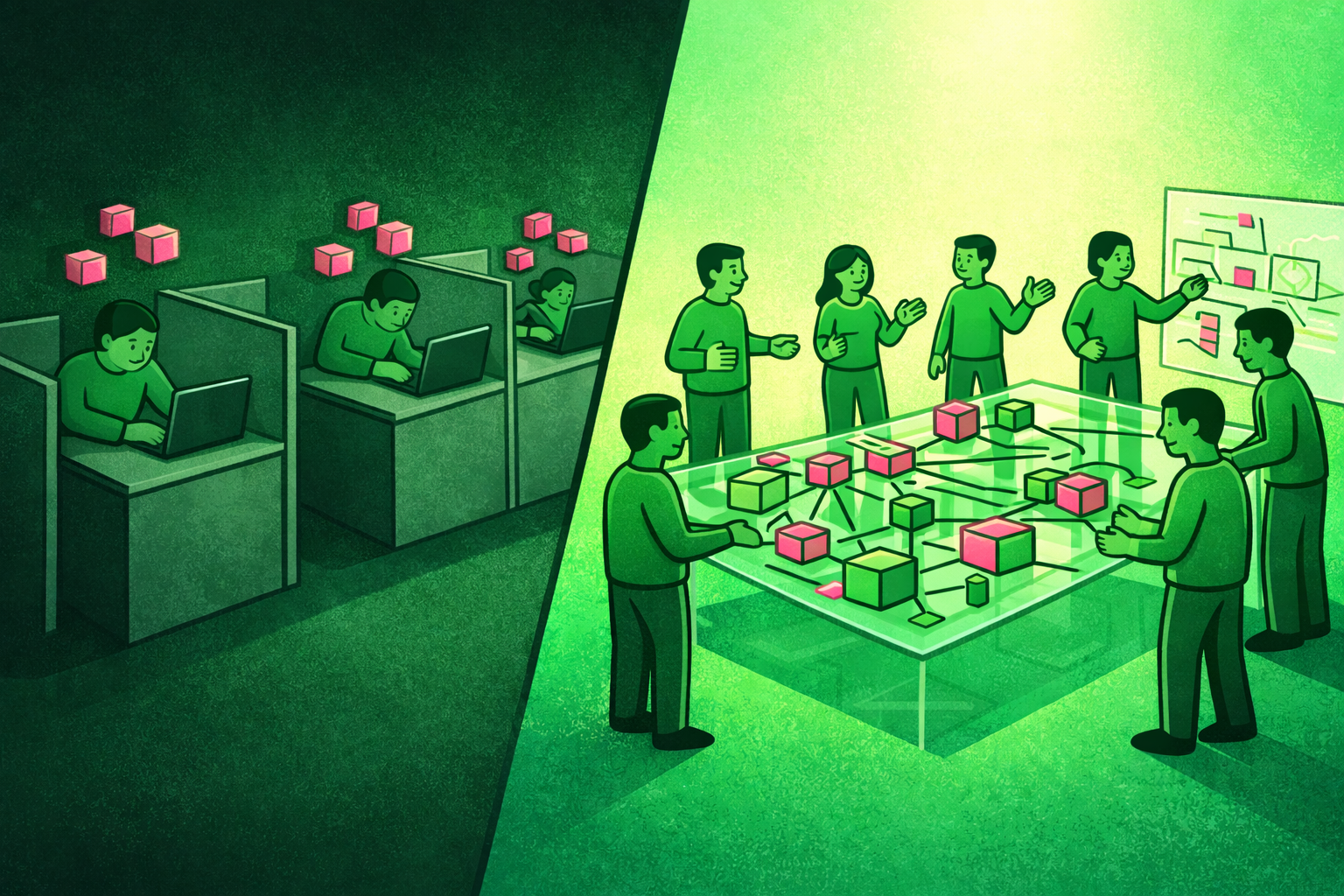
To make the jump, teams need three things:
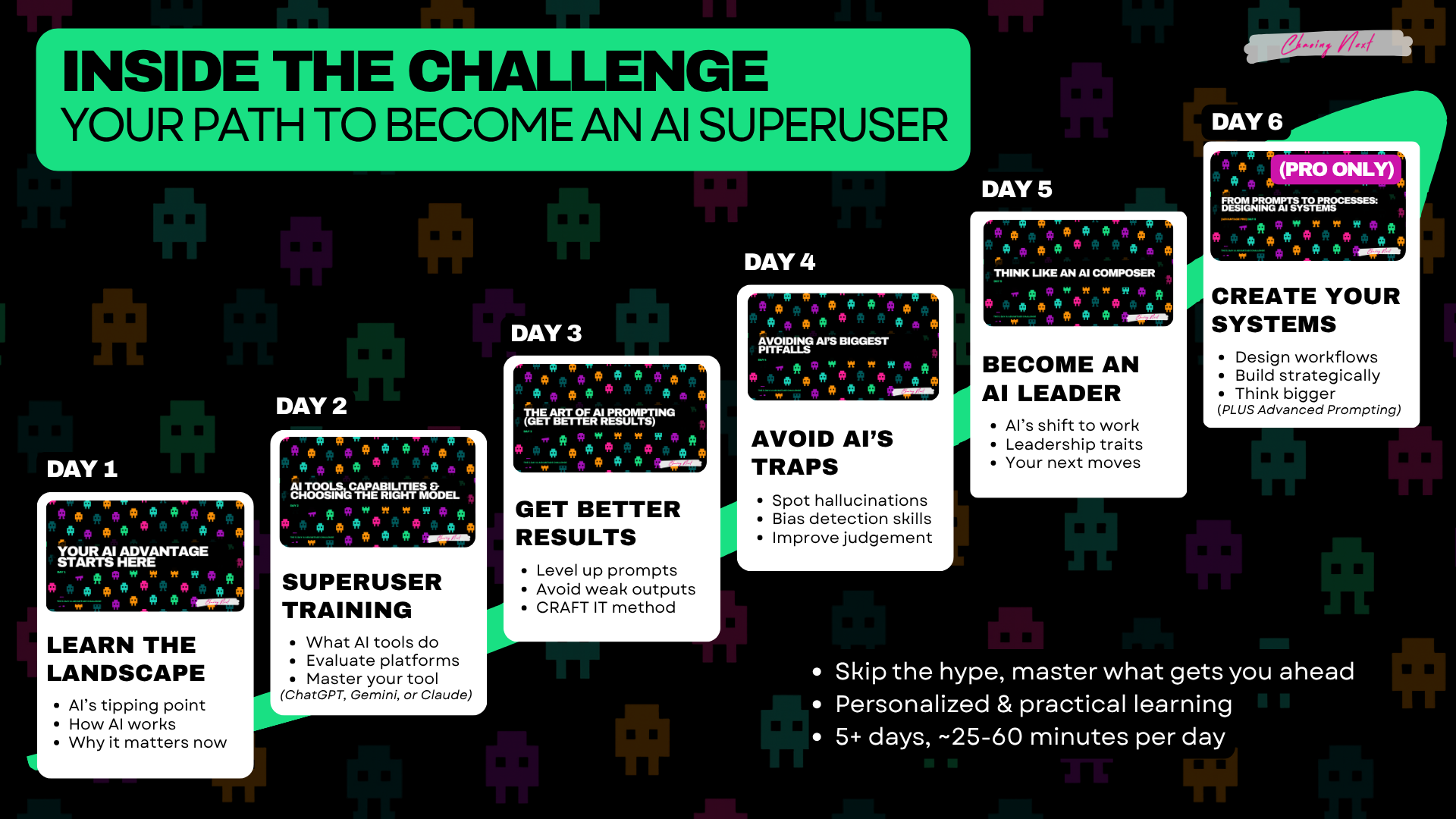
1. Training that teaches process redesign thinking.
Don't stop at how to use the tool...
Teach them where AI fits into processes and to spot how workflows could change.
2. A requirement to spend time on redesign.
Manager expectations are important to shift from augmentation to strategic work.
Instead of telling the team to use AI daily (Level 1), think "identify one workflow we could redesign together this month" (Level 2).
3. Organizational support to act on redesign ideas.
People need to know that questioning how work happens is the goal, not just working within existing processes.
You don't need to be an engineer or on the AI taskforce to contribute strategy.
Everyone is learning as they go.
That's what the team culture needs to be... permission to experiment with how work can change.
When all three align, teams will progress.
But if training only teaches Level 1 thinking, your team will stay there no matter how much you push.
They won't be able to redesign what they haven't been taught to see.
Your role as a champion is helping your team see that Level 2 exists.